UFOs AT PEARL HARBOR

My recent travels included a stop at Pearl Harbor.  I had been there before, many years ago.  This time  it seemed different; there was an added dimension.  I saw Servicemen in uniform off-base.  It is not Pearl Harbor that has changed, it’s everywhere else.  Before Vietnam a soldier on leave wore his uniform in public with pride and respect.  Today a uniform engenders both scorn and respect from various disparate members of the public.  We have lost something when our soldiers, sailors, marines and airmen are seen as controversial figures when in uniform.

God and the Soldier, we adore,
In time of danger, not before.
The danger passed and all things righted,
God is forgotten and the Soldier slighted.

~Rudyard Kipling

One of the many highlights of the trip was a luncheon at the Sam Snead restaurant at the Navy-Marine Club House in Honolulu.  It was a monthly affair of pilots who call themselves UFO’s because they are members of a select group known as the United Flying Octogenarians – having flown as pilot in command of an aircraft after achieving the age of 80.  There were 14 of us at the table.  The pilot sitting at my right was one of the two declared Republican primary contenders for the U.S. Senate, John Carroll.  He said “You know, everyone I know at this table is a Republican”.  John has been responsible for much of the environmental reform on the Islands.  I live in the Northeast.  Some things are different in Hawaii.

JUSTAPHOTO – THE DIVER

THE DIVER

INCOME DISPARITY

A picture of income disparity

Vertical scale = per capita income Horizontal scale = population segments

This chart was published in Mother Jones to make some point or another about the shame of income disparity in America.  The chart is taken from a book titled “The Haves and the Have-Nots,” by the World Bank economist Branko Milanovic. I don’t know why Milanovic selected these countries and can only surmise it was because they were the three fastest growing major economies in the world over some recent time frame.

What the chart says to me is (1) the poorest group in the U.S. is infinitely better off than the poorest group in the other nations, (2) income disparity is the least in the U. S.  This is apparent all along the scale from the most impoverished to the wealthiest as shown by the relative flatness of the U.S. curve, (3) whatever faults the American economic system may have, they are insignificant when compared to the other systems because every group is better off in America, particularly the lower income ones.  Mother Jones picked a rose and called it a thorn.

China is a socialist country; India is not; Brazil is somewhere in between.  Nevertheless, the chart is a good illustration of the superiority of an economic system that incentivizes individual entrepreneurialism and protects the rewards for success with a healthy respect for property rights.  It’s a fact of life that equal treatment is bound to produce unequal results because people are not equal.  The capitalistic system gets the best from the best; socialism does not.  And if China can be taken as an example, socialism doesn’t reduce income disparity either.

SOME MORE WORDS ABOUT WORDS

Now for a more serious discussion of how words are used for subtle deception –

RULES for RADICALS by SAUL ALINSKY – A WORD ABOUT WORDS

Continuing with the chapter by chapter series on Rules for Radicals, today we add Comments about the chapter called A word About Words.

Synopsis of the chapter entitled A Word About Words
Power
Words that are soft-sounding and peaceful are soporific and ineffective. Such words are inappropriate for our purposes because “In the politics of life we are concerned with the slaves and the Caesars, not the vestal virgins”. The word “power” is often maligned but fear not to use it. “To know power and not fear it is essential to its constructive use and control. In short, life without power is death; a world without power would be a ghostly wasteland, a dead planet!”.

Self Interest
“The myth of altruism as a motivating factor in our behavior could arrive and survive only in a society bundled in the sterile gauze of New England puritanism and Protestant morality …. It is one of the classic American fairy tales”.

Compromise
“To the organizer, compromise is a key and beautiful word…. If you start with nothing, demand 100 percent, then compromise for 30 percent, you’re 30 percent ahead.”

Ego
Ego is self confidence. The community organizer’s “ego must be so all-pervading that the personality of the organizer is contagious, that it converts the people from despair to defiance, creating a mass ego”.

Conflict
The word “conflict” is much maligned in the media and by Madison Avenue [the advertising industry]. However, “Conflict is the central core of a free and open society”.

Commentary
A Word About Words, the title is intriguing but the content is very disappointing. Judging by the title one would expect to read about some clever and devious ways in which various words could be employed by a community organizer to further the activist’s agenda.  However, the chapter is little more than a revelation of the depth of the sullen author’s cynicism and obsession with power.

Thankfully the chapter is a short one.

THE STONE WALL

One of the many things I love about my native New England is all the stone walls.  Get off the beaten path; take a walk in the woods.  Bring your imagination and a walking stick.  It matters not where you go; soon you will come to a stone wall.  It may run straight and true or it may meander awkwardly to and fro.  Chances are many of the stones have tumbled a bit from where they were originally laid.  The summer sun and the winter snow have had their way with the rocks during the two hundred years or more they have been standing there patiently defining a property line or offering support for a barn or home that’s no longer anywhere in sight.

Find a fallen tree that’s just right.  Sit; have a snack and let your imagination run.  You have been walking for two hours in the woods without seeing a building or even a new mown field.  It’s plain to see no one lives here.  No one ever did.  Ah, but yes someone did!  That tree you are sitting on is just the right height because it fell across a row of stones.  The line goes down the hill and then it turns to the right.  Someone put those stones there.  Big stones, small stones, tan stones and black rocks turned green by the elements. Mixed in you find a few samples of red granite sitting here and there just to pique your interest.

Either side of the wall there are trees, big and small, short and tall, mostly deciduous hardwood trees on land that was original covered only with soft conifers.  The hardwood trees are a clue; the stone wall is the proof; you are a welcome trespasser on sacred ground.  Not holy ground, but land prepared by horse and hand and hard labor to make a home.  Sacred ground because of the love and lives that once lived and toiled here.

It’s time to sit quietly on your fallen tree and listen to your imagination as you munch a snack.  The young couple had a 9 year old work horse, 2 cats and a dog named Digger.  There were more chickens than an ordinary person could count and a big wooden bucket filled with pickling salt in the root cellar.  One spring they planted orange seeds they had dried just for fun.  There were pumpkin and some squash seeds too.  No orange tree ever showed a leaf but some of the pumpkin grew, and the squash and zucchini, oh my!  Most of it was shared with Caleb’s sow down the road, so much grew that year.

It was David and Mary who cleared the land.  After Digger came Digger Too.  Digger’s job had been to play in the mud while his masters worked the garden soil.  Digger Too’s job was to provide love and companionship for his now aging couple and to chase an occasional squirrel of course.  David went first.  The men usually did in those days.  He was 3 score and 4.  That’s two more than the time assigned to man.  Life had been hard but it was good.  With David gone, Mary did the best she could.

Caleb came up when there was something she couldn’t handle, which wasn’t very often.  The horse was long gone but Mary liked to sit in the kitchen and look out at that old barn; it held so many memories.  It filled her soul with thoughts of youth and times of shared love and chores.  One late October day Caleb heard Mary say the doors wouldn’t hang like that if David were still around.  The very next morning Caleb came with his son and they put new hinges on those doors.  It was just 2 days after Thanksgiving when they found Mary.  Her head was bowed; her breath was gone.  But she was erect in the kitchen chair where she had been looking for the last time at those barn doors.  That was 1749.

I stood up poked around where I thought the old barn might have been.  I shuffled some leaves with a boot and sure enough, I picked up one half of an old rusty hinge.  I laid it back exactly as I found it, picked up my pack and walked on, a little more reverently then when I had walked in.

by Bob B

WE ARE A REPUBLIC, NOT A DEMOCRACY

“A democracy is nothing more than mob rule, where 51% of the people may take away the rights of the other 49%”.  Some credit that line to Thomas Jefferson, others say no.  But he might well have said it because the founding fathers decidedly did not form the country as a Democracy and for very good reason.  We were formed as a Republic.  Ben Franklin warned that we may not be able to hold it, but we have held it for nearly 240 years.  Now it is slipping away.

Our Republic is slipping into the Democracy the founders feared.  Democracy cedes the power to those candidates most capable of charming the people, not to the candidates most able (and honest) to govern.  There is a reason one of our political parties is called Democratic and the other Republican.  It is the same reason that Democrats seek to alter and diminish the Constitution while Republicans seek to conserve it.  The United States Constitution is a republican (small r) instrument.  Its provisions surrender simple majority rule to the wonderful concept of the separation of powers.  It is still government by the people but with added protection for the people from the government they elect.

Think about that as you watch the video.

THERE IS NO REASON TO BE DISAPPOINTED WITH BARACK OBAMA

It has become tiring to read and listen to people say “I am very disappointed with Obama’s actions on … (fill in the blank).”  There is no justification whatever for disappointment on any facet of the President’s performance.  His agenda was telegraphed well in advance of his election.  I have these words for the ‘disappointed’.

You knew of Obama’s admiration for the Black Liberation Theologist, the Rev. Jeremiah Wright.  You knew of the pastor’s virulent condemnation of white America.  If you read Obama’s book, Dreams from My Father you knew that Obama was so moved by Wright’s sermon entitled “The white man’s greed runs a world in need” that Obama cried as he sat in the church pew at the end of that sermon and decided right then and there what his mission in life would be.

If you looked up Black Liberation Theology you knew:

One of the pillars of Obama’s home church, Trinity United Church of Christ, is “economic parity.”  On the website, Trinity claims that God is not pleased with “America’s economic mal-distribution.”  Among all of controversial comments by Jeremiah Wright, the idea of massive wealth redistribution is the most alarming. The code language “economic parity” and references to “mal-distribution” is nothing more than channeling the economic views of Karl Marx. Black Liberation theologians have explicitly stated a preference for Marxism as an ethical framework for the black church because Marxist thought is predicated on a system of oppressor class (whites) versus victim class (blacks).

Then, if you are a person who thinks, you knew Obama would pursue socialist policies of re-distribution.  If you thought, then you knew he would follow the socialist pattern of class warfare.  If you thought, then you knew he would need to suspend individual freedoms in order to build the all powerful government necessary for the achievement of his goals  If you thought, then you knew the U.S. Constitution would be his greatest obstacle and our greatest protection and he would violate his inaugural pledge to uphold it.  If you didn’t think, you shouldn’t have voted.  But if you did think and vote, then you got exactly what you voted for so stop saying you are disappointed!!

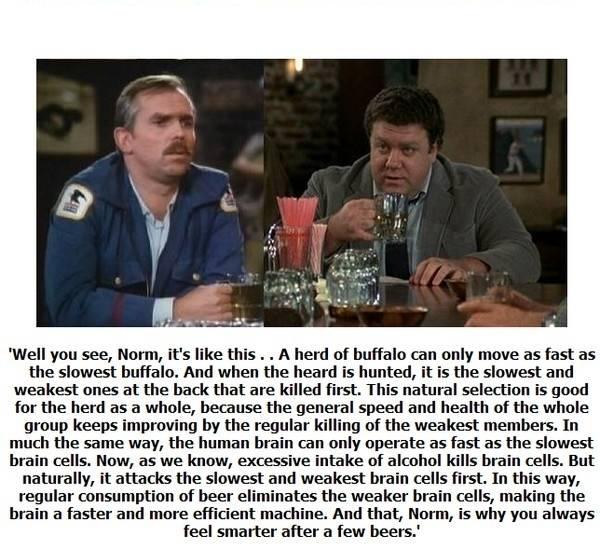
BEER BRAINS


ROUSSEAU, LOCKE AND BURKE

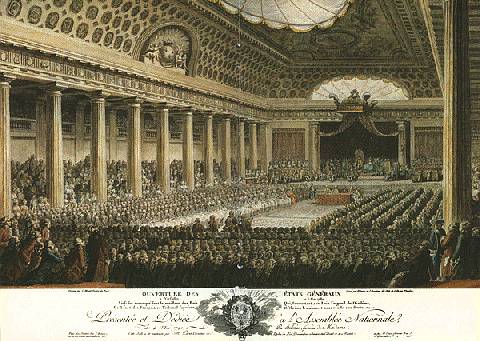
GREAT HALL OF THE ESTATES GENERALE, FRANCE

It was in this chamber that a deviation of tradition launched the French Revolution.  The French majority demanded an equal head for head vote in the affairs of government and it was denied.

Locke, Rousseau and Burke were three influential thinkers of that general era when the Western world was in transition from totalitarian rule by monarchs to some other form of government.

John Locke was a British philosopher of the 17th century.  His writings greatly influenced the content of our Declaration of Independence.

Jean Jacques Rousseau was an 18th century philosopher who would fall into Thomas Sowell’s unconstrained vision category.

Edmund Burke was a British statesman and political philosopher of the late 18th century.

That’s who they were; now what did they believe and why does it matter?  I will let Jonah Goldberg answer that.  He writes:

“Readers of this blog, the book or, in particular people who’ve heard me speak about the book at length, know that I think political philosophy, or more accurately, political visions can be boiled down to Locke versus Rousseau. The Lockean vision holds that man is the captain of his soul, that his rights come from God, the individual is sovereign, that the government exists because men of free will cede certain authorities to it in order to best protect  their lives and property.

The Rousseauian vision holds that the collective comes before the individual, our rights come from the group not from God, that the tribe is the source of all morality, and the general will is the ultimate religious construct and so therefore the needs — and aims — of the group come before those of the individual.

Fascism, like Communism, Socialism, Progressivism and all the other collectivist isms are all based on the Rousseauian vision of the group, the tribe, the class taking precedence over the individual.

I’ve also been writing for years that “transnational progressives” are trying to take the Progressive project to the world stage. This was the dream of HG Wells –originator of the phrase Liberal Fascism — who often proclaimed that FDR was the living embodiment of the “world brain.” It’s the aspiration of Hillary Clinton’s It Takes a Village, in which the logic of everything inside the village, nothing outside the village is eventually extended, in Clinton’s telling,  to the global village.

Bill Clinton’s modestly named “Global Clinton Initiative” is sold with the following sentiment from Bill Clinton, which appeared on the GCI’s website for years. “In my life now,” Clinton declares, “I am obsessed with only two things:  I don’t want anybody to die before their time, and I don’t want to see good people spend their energies without making a difference.”  (Historians may add that there was a third obsession — with his wife’s campaign for president).

Forget the gnostic hubris in the idea that Clinton could be part of anything that could determine when the right time to die for each of billions of humans might be, the idea that everyone — and I mean everyone — should be “making a difference” as defined by a handful of global priests is really a stunning, and to my mind frightening, ambition. Leave no child behind has escaped the paddock and is now galloping across the globe.

I bring all of this up because I found a wonderful quote from John Fonte’s essay in the new Claremont Review of Books. Fonte, the author of the phrase “transnational progressives,” reviews books by Strobe Talbott and Marc Plattner. In the Talbott book, it’s recounted how the top brass of the early Clinton administration proposed dealing with the end of the Cold War. Bill was pondering the “direction of history” (in what appears to be a basically Hegelian  way) when Al Gore chimed in. Gore explained:

Rousseau said the body politic is a moral being possessed of a will. He was thinking at the national level. We need to take it to the international one. We need to make the leap from nationhood to a sense of identity that is truly global, but that embodies Rousseau’s point.

Apparently Bill agreed, he just didn’t think he could sell that to the masses. So, in the meantime he was, in Talbott’s words, “careful not to broadcast” these beliefs.”

For a critique of Goldberg’s analysis you may want to read the Cranky Conservative.